

Is the Leagend JS300 Worth Buying? Honest Pros, Cons & Who It’s For
If you’ve ever been stranded by a dead car battery—or worried your battery will give up sooner than it should—you know how stressful that is. Traditional lithium jump starters promise quick fixes, but they often come with safety concerns, short lifespans, and poor cold‑weather performance. Meanwhile, constantly replacing batteries quietly drains your wallet.
That’s why supercapacitor jump starters are attracting attention—and the Leagend JS300 is one of the strongest contenders for 12V vehicles. But is it truly worth it for you?
Below is a clear, honest take: what really stands out, what to consider, and who should buy, based on verified product data and real user feedback.
What makes the JS300 a real supercapacitor jump starter?
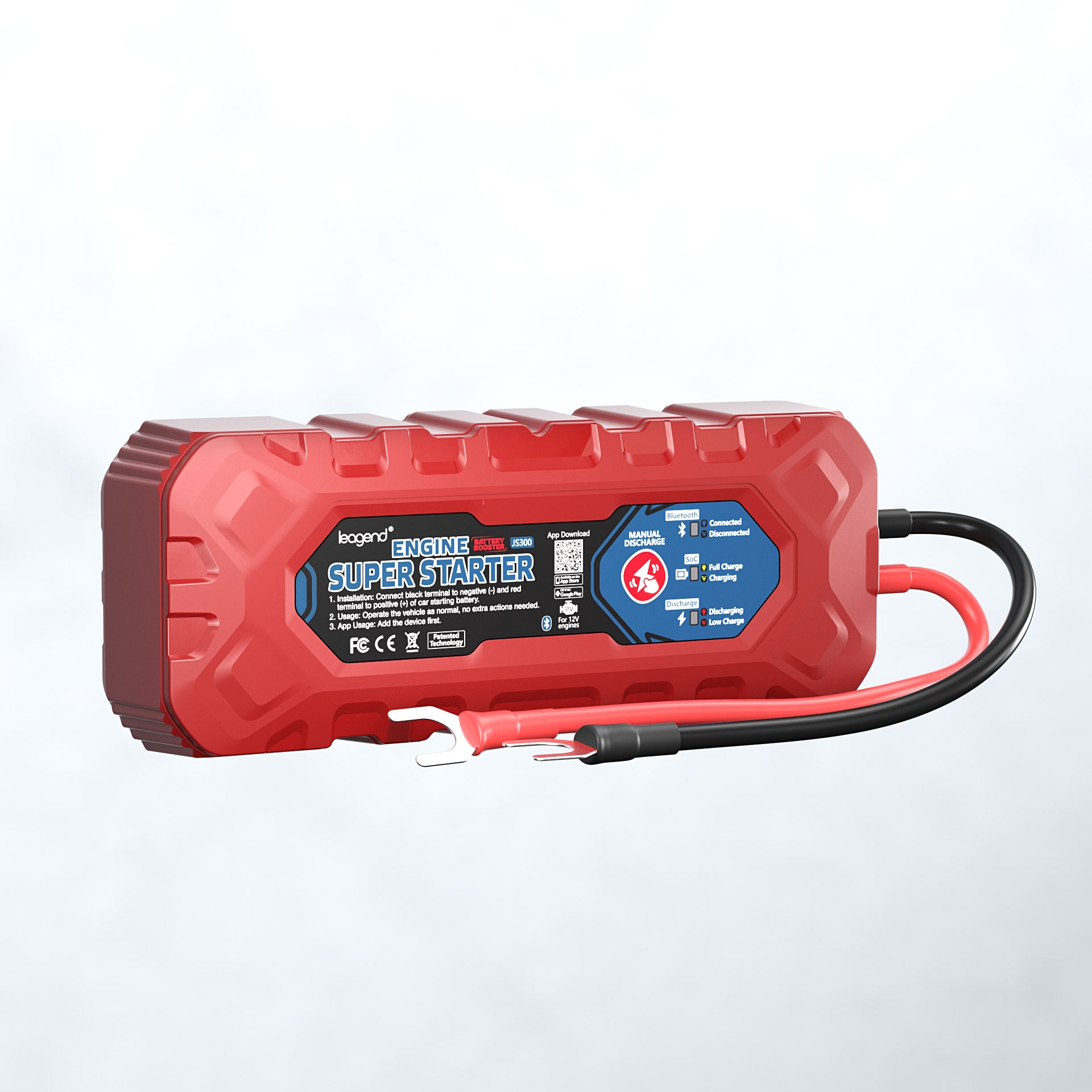
Unlike lithium-based emergency packs, the JS300 uses supercapacitors—storing and releasing energy through a physical process instead of chemical reactions. This lets it be more than a one‑time emergency tool. Once installed, it operates automatically whenever you start the car, giving a high burst of power for startup and then stepping back. No manual prep, no recharging, and no lithium‑battery risks.
The product page confirms this automatic, onboard design, highlighting installation once and auto activation.
Core advantages, verified and practical
1) Outstanding safety and extreme‑temperature reliability
- Works from −40°C to 80°C. This is far beyond what many lithium-based units support, so it’s suitable for very cold winters or very hot summers without losing effectiveness.
- No battery inside → no swelling, combustion, or explosion risk. That’s a major safety plus and aligns with supercapacitor design rather than lithium cells.
- IP65 waterproofing, built to survive real‑world use outdoors.
These points make the JS300 a safer, more weather‑ready choice than many conventional jump starters.
2) Truly set‑and‑forget, minimal maintenance
- Install once, and leave it. The page emphasizes maintenance‑free, no charging needed, and simple installation—exactly what a busy driver wants.
- Automatic activation during startup means you don’t have to think about it; it handles high current for a brief moment when needed and then disengages.
- Long‑term use is the focus rather than occasional manual recharging or carrying a separate unit.
This is ideal when you hate fiddling with cables or remembering to recharge devices—especially for daily commuters or families.
3) Protects your car battery, not just jump‑starts
- The supercapacitor handles the high current burst during engine start, reducing strain on your car’s lead‑acid battery. The page explains how this keeps your battery voltage higher during start and avoids deep‑discharge damage, extending replacement cycles.
- Real numbers on the page describe extending battery life from about 2 years to 5 years through reduced stress. That’s a concrete financial and reliability benefit.
This is the key differentiator from many jump starters: it actively preserves battery health every time you drive, not just in emergencies.
4) Strong 1000A peak output and broad 12V compatibility
- 1000A peak current, designed for 12V vehicles. It’s suitable for substantial engines—large sedans, SUVs, trucks, and turbocharged cars—without being a tiny or weak accessory.
- Works even when the battery voltage drops low, and is built for everyday vehicles that need real power for crank.
- Typically supports widely used 12V lead‑acid types, making it a practical choice for many owners rather than niche applications.
This makes the JS300 usable across a wide set of typical 12V vehicles where cold starts or battery stress are real concerns.
5) Smart app monitoring for proactive care
- BLE‑based app support provides real‑time visibility into voltage, temperature, alerts, and records—useful to diagnose early issues rather than waiting for failure.
- The system promotes data tracking and early warnings, which is valuable for drivers who want to avoid surprises or monitor a vehicle left unused for long periods.
This turns the JS300 into a small smart diagnostic aid, not just a booster.
6) Long service life and certifications
- 100,000+ charge‑discharge cycles on the product page—far beyond typical lithium jump starter cycles.
- The page also mentions ultra‑long lifespan and many starts, designed for years of use.
- CE/FCC and other protections, plus the product’s own safety and monitoring features, suggest a more mature, certified product rather than a random gadget.
A decade or more of service is plausible, which is a major value over disposable or shorter‑life units.
Honest disadvantages to consider
No product is perfect; here’s what to keep in mind before deciding.
1) Only for 12V systems
- The JS300 targets 12V vehicles only. If you drive a 24V vehicle or certain hybrid systems, this isn’t the right pick; a different model is needed for those cases
- For 24V trucks or buses, another product line is referenced by the brand. This is a normal limitation of the design, not a flaw—just pick the correct system for your vehicle.
2) Fixed cables and standard terminal size
- It’s designed for conventional engine bays. Vehicles with unusual battery placement or very tight space might require more care during installation.
- Standard terminal hardware is used; some very atypical setups may need slight adjustments.
These are minor tradeoffs but worth noting if your vehicle has an unusual layout or non‑standard battery hardware.
3) Higher upfront cost than basic lithium packs
- As a premium supercapacitor unit, it costs more upfront than cheap lithium jump starters.
- The long‑term payoff is in far longer life, zero maintenance, and better battery protection, but customers with very tight budgets or only occasional driving may hesitate at first glance.
If upfront price is the only concern, be sure to weigh it against years of reduced battery replacements and less chance of being stranded.
What do real users say?
Third‑party community feedback on supercapacitor jump starters reinforces both strengths and limitations:
- A mechanic‑advice thread discussed experiences with supercapacitor units; one user specifically noted a flawless jump on a dead battery. That kind of real‑world confirmation is valuable when evaluating new technology.
- Another discussion from Australia mentioned supercapacitor units working well, with the main limit being that the burst window is short—only a few seconds—so if a vehicle is difficult to start, you may need to recharge and try again. This is not a flaw of JS300 specifically but a known behavior of supercapacitor jump starters overall.
These comments align with the JS300’s design: extremely quick, safe bursts of power and strong real‑world reliability, with some practical limits on repeated attempts if the vehicle is unusually hard to start.
Who should buy the JS300?
From everyday drivers to owners of specialized vehicles, it suits many use cases—especially when reliability and long service matter more than the lowest price.
1.Daily commuters & families
-
Automatic start assistance with no routine maintenance is perfect when you can’t afford downtime or uncertainty.
2.Drivers in extreme climates
-
Works well from arctic cold to desert heat, keeping you from the common cold‑weather failure issues of many lithium units.
3.Larger 12V vehicles or turbo engines
-
Heavy‑duty starts are handled confidently, where weaker packs might struggle.
4.Cars parked or driven infrequently
-
Suitable for seasonal vehicles, weekend cars, or vehicles left in storage, because it avoids the usual battery drain worries and still provides a reliable start.
5.Owners who want to protect expensive batteries
-
Luxury cars or vehicles with costly AGM or similar batteries benefit from reduced wear and longer life, making this an investment that can save money over time.
6.New or non‑technical drivers
-
Simple install, automatic operation, useful app monitoring, and safety features make it good for anyone who just wants dependable starts without tech headaches.
Final verdict
Yes—if you drive a 12V vehicle and prioritize long‑term reliability, safety, and cost effectiveness over the lowest upfront price.
The JS300 fixes the main weaknesses of many lithium jump starters—temperature sensitivity, safety risks, and short lifespans—while adding real battery protection and smart monitoring. It’s not just an emergency tool; it’s a smarter, always‑on reliability upgrade for your vehicle.
For drivers who want fewer surprises, fewer battery replacements, and many years of maintenance‑free use, the JS300 is a strong buy whenever stock is available.
Tip for your page: since it’s currently sold out, consider adding a restock notification or an estimated arrival date, so interested buyers don’t leave without a way to come back.


